
To file a water damage insurance claim, work in order: mitigate the damage, document it, report it, prove it, then get paid.
Do those steps in the right sequence and you protect the money you are owed. Skip one and you hand the insurer a reason to pay less.
Water damage and freezing is the second most common home insurance claim after wind and hail, so the process below is one the average homeowner faces at least once.
This is the single ordered walkthrough that puts mitigation and proof before the phone call, and it names the deadlines the short articles leave out.
The fast version: how to file a water damage insurance claim
Here is the whole process in one place, in the order it actually happens:
- Stop the water and prevent more damage. This is your contractual duty to mitigate.
- Document everything with photos and video before you clean up or throw anything out.
- Confirm the cause is covered before you call it in.
- Notify your insurer promptly and open the claim to get a claim number and an adjuster.
- Meet the adjuster, walk them through the loss, and get your own repair estimate.
- Submit a signed proof of loss by the deadline in your policy.
- Review the settlement, then claim the second depreciation check once repairs are done.
The rest of this guide is each step in detail, including where owners lose money. If you are still mopping, start with the correct first hour of a flood and come back.
Step 1: Stop the water and mitigate the damage
Before anything else, shut off the water at its source or the main valve so the damage stops growing.
Your policy almost certainly has a duty to mitigate clause. It requires you to take reasonable steps to prevent further loss.
That means extracting standing water, pulling soaked items off the floor, and getting air moving. A professional drying crew counts as reasonable mitigation.
Keep every receipt from this stage. Tarps, a rented pump, a hotel night, the emergency plumber, all of it is often reimbursable.
Do not make permanent repairs yet. Temporary steps to stop the bleeding are expected, but a full rebuild before the adjuster sees it can wipe out your claim.
Step 2: Document everything before you clean up
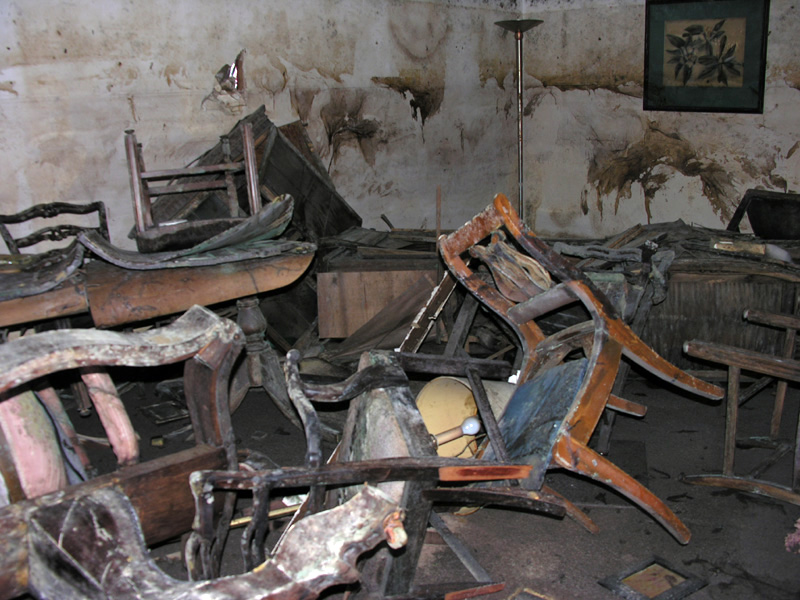
This is the step owners skip, and it is the one that costs them the most. Water you already cleaned up is, to a claim, water that never happened.
Before you move a single box, take wide photos and a slow video of every affected room. Capture the water line, the source, and the ceiling above.
Photograph each damaged item up close. Record model and serial numbers on appliances and electronics where you can.
Do not throw the ruined things away yet. Adjusters want to see the damage, so keep destroyed items as evidence, or at least photograph them from several angles first.
Start a simple inventory list: item, rough age, and what you paid. This list becomes the backbone of your claim and your proof of loss later.
Note the date, time, and cause in writing while it is fresh. A burst supply line at 2am reads very differently from a slow leak nobody noticed.
Step 3: Confirm your water damage claim is actually covered
Cause is everything in a water claim. A sudden and accidental event is usually covered. Slow, gradual, or neglected damage usually is not.
Covered tends to include a burst pipe, an overflowing washer or water heater, a storm-driven roof leak, and an ice dam.
Excluded tends to include gradual seepage, long-term leaks, poor maintenance, and ground flooding, which needs separate flood insurance.
Sewer or drain backup is its own trap. It is a separate rider many owners learn they declined only at claim time.
Read your declarations page before you call, or check whether your policy covers this kind of water damage so you frame the cause correctly from the first sentence.
Step 4: Notify your insurer and open the claim
Call your insurer's claims line as soon as the damage is under control. This is your notice of loss, and most policies demand it promptly.
Late notice is one of the easiest denials an insurer can issue. Even when damage is covered, sitting on it for weeks gives them an opening.
Have your policy number, the date and cause, and a short description ready. You will get a claim number and an assigned adjuster.
Ask two questions on this call: what is my deadline for a proof of loss, and does my policy pay actual cash value or replacement cost.
If the damage looks close to your deductible, get a repair estimate before you commit. Every claim is logged to the CLUE database, and filing can raise your premium at renewal.
Step 5: The adjuster visit, and getting your own estimate
The insurer sends an adjuster to inspect the damage, take measurements, and write an estimate of what they think it costs to fix.
Be there in person. Walk them through every affected area, point out the water line and the source, and hand over your photos and inventory.
Remember whose side they are on. The adjuster works for the insurer, and their job leans toward closing your claim quickly and for less.
So get your own number. Have a licensed contractor or restoration company write a detailed estimate you can hold against the adjuster's.
Line items matter more than the total. Make sure both estimates account for drying inside the walls, not just the visible surface, before anyone calls it done.
Knowing the going rate protects you here. Read up on what water damage restoration actually costs so a lowball estimate is obvious on sight.
Choosing that contractor carefully is part of the claim, not separate from it. Here is how to pick a restoration company that documents its work for the insurer.
Step 6: Proof of loss and the deadline that ends claims
A proof of loss is a sworn, signed statement of what you are claiming. It is the formal document your payout is built on.
It typically lists the damaged property, its value, the cause, and the amount you are asking the insurer to pay, backed by your estimates and inventory.
The deadline is the part that ends claims. For a flood claim under the NFIP, you have 60 days from the date of loss, per FEMA, and a day late can mean denial.
Standard homeowners policies vary, and many require the proof of loss within a set window after the insurer requests it. Confirm your exact number in writing.
Do not let the deadline pass while you wait on a contractor. If you cannot finish tallying in time, ask for an extension in writing before the clock runs out.
There is also a longer suit limitation period, often one to two years, that caps how long you have to take legal action if the claim goes sideways.
Step 7: The settlement, ACV vs replacement cost, and the second check
How you get paid depends on two letters in your policy: ACV or RCV. This decides whether the first check is the whole story.
Actual cash value pays what the damaged item is worth today, after depreciation. A ten-year-old floor is paid as a ten-year-old floor.
Replacement cost value pays to replace it new, but it does so in two parts, and the second part is where money gets left behind.
With an RCV policy, the first check is the depreciated value. The insurer holds back the rest, called recoverable depreciation, as a safeguard.
You get that second check only after you complete the repairs and send proof, usually the contractor's final invoice matching the estimate line items.
There is a deadline on this too. Policies often give you 180 days to two years from the date of loss to finish repairs and claim the held-back money, or you forfeit it.
One more wrinkle if you have a mortgage. Large checks are often made out to you and your lender, who must endorse them before the funds release for repairs.
What to do if the adjuster lowballs you
If the offer will not cover the real repair, you can push back. A first estimate is a negotiation opening, not a final verdict.
Start with the paper. Send your contractor's line-item estimate and ask the insurer to reconcile it against theirs, item by item.
If they will not move, invoke your policy's appraisal clause. Each side hires an appraiser, and a neutral umpire settles the difference.
For a large or messy loss, a licensed public adjuster works for you, not the insurer, usually for a percentage of the recovery.
And if the claim comes back denied or badly underpaid, here is how to fight a denied water damage claim step by step.
Deadlines and timeline at a glance
The whole process runs on clocks, and missing one is how covered damage goes unpaid. Here are the ones that matter:
- Notice of loss: promptly, ideally within days of discovering the damage.
- Adjuster inspection: often within about 3 to 7 business days of reporting.
- Proof of loss, flood/NFIP: 60 days from the date of loss, per FEMA.
- Proof of loss, standard policy: varies, often a set window after the insurer requests it.
- Recoverable depreciation: complete repairs and submit proof within roughly 180 days to 2 years.
- Suit limitation: often 1 to 2 years to file legal action, set by your policy and state.
Write your own dates down the day you report. The single best habit in any claim is a dated log of every call, name, and promise made to you.
Not sure the drying was done right, or whether the drywall has to come out before you sign off? A quick call can save a much larger repair and a second claim.
(844) 502-1354The mistakes that quietly shrink a water damage claim
Most underpaid claims are not denied outright. They are quietly whittled down by a handful of avoidable slips.
The big one is cleaning up before documenting. If it is dry and gone when the adjuster arrives, it is hard to prove it was ever there.
The next is accepting the first check as final on an RCV policy, and never claiming the recoverable depreciation you were owed.
Others: reporting late, tossing damaged items too soon, doing permanent repairs before the inspection, and never getting an independent estimate.
Do the opposite of each and you tilt the claim back toward what your repair actually costs, which is the number the policy is supposed to pay.
Common questions
How long do I have to file a water damage insurance claim?
Report the loss promptly, ideally within days, because most policies require prompt notice and late reporting is a common reason for denial. The bigger deadline is the proof of loss. Flood claims under the NFIP give you 60 days from the date of loss, per FEMA, while standard homeowners policies set their own window, often after the insurer requests it.
What is a proof of loss and why does it matter?
A proof of loss is a signed, sworn statement listing the damaged property, its value, the cause, and the amount you are claiming, backed by your estimates and inventory. It is the formal document your payout is built on. Miss its deadline and the insurer can deny an otherwise valid claim, so confirm your exact date in writing.
What if the adjuster's estimate is too low?
You can dispute it. Send your contractor's line-item estimate and ask the insurer to reconcile it against theirs. If they will not budge, invoke your policy's appraisal clause, where each side hires an appraiser and a neutral umpire decides. For large losses, a licensed public adjuster negotiates on your behalf for a percentage.
Why did I get two checks, and is the second one real?
On a replacement cost policy, the first check is the depreciated value and the insurer holds back the rest, called recoverable depreciation, until you finish repairs. The second check is very real money you are owed. Complete the work, send the final invoice, and claim it before the policy deadline, often 180 days to two years.
Will filing a water damage claim raise my premium?
It can. Every claim is logged to the CLUE database that insurers share, and a paid claim can raise your rate at renewal or, with repeat claims, affect renewal itself. If the damage is close to your deductible, get an estimate first to see whether the payout is worth the long-term cost.
Do I need to hire my own contractor or public adjuster to file?
You do not need either to file, but an independent contractor estimate is strongly worth getting so you can check the adjuster's number. A public adjuster is optional and best reserved for large or disputed claims, since they take a percentage of the recovery in exchange for handling the negotiation.
Sources
- Facts + Statistics: Homeowners and Renters Insurance — Insurance Information Institute (Triple-I)
- Submit Flood Insurance Proof of Loss Form Within 60 Days of Loss — Federal Emergency Management Agency (FEMA)
- A Brief Guide to Mold, Moisture and Your Home — U.S. Environmental Protection Agency
- National Flood Insurance Program Claims Handbook — Federal Emergency Management Agency (FEMA)
- ANSI/IICRC S500 Standard for Professional Water Damage Restoration — Institute of Inspection, Cleaning and Restoration Certification (IICRC)
- Flood Insurance Claim Deadlines — United Policyholders
- What Is Recoverable Depreciation for Home Insurance Claims — U.S. News and World Report
- Homeowner discussions on water damage claims (r/Insurance, r/HomeImprovement) — Reddit community threads
 InsuranceDoes homeowners insurance cover a burst pipe?
 InsuranceYour water damage claim was denied. Here is what to do.
 CostsWhat does water damage restoration cost?
 EmergencyBasement Flooded? What to Do First (Hour by Hour)
 DIY vs ProfessionalHow to choose a water damage restoration company
 Drying & RemovalHow long does it take to dry out walls after a leak?