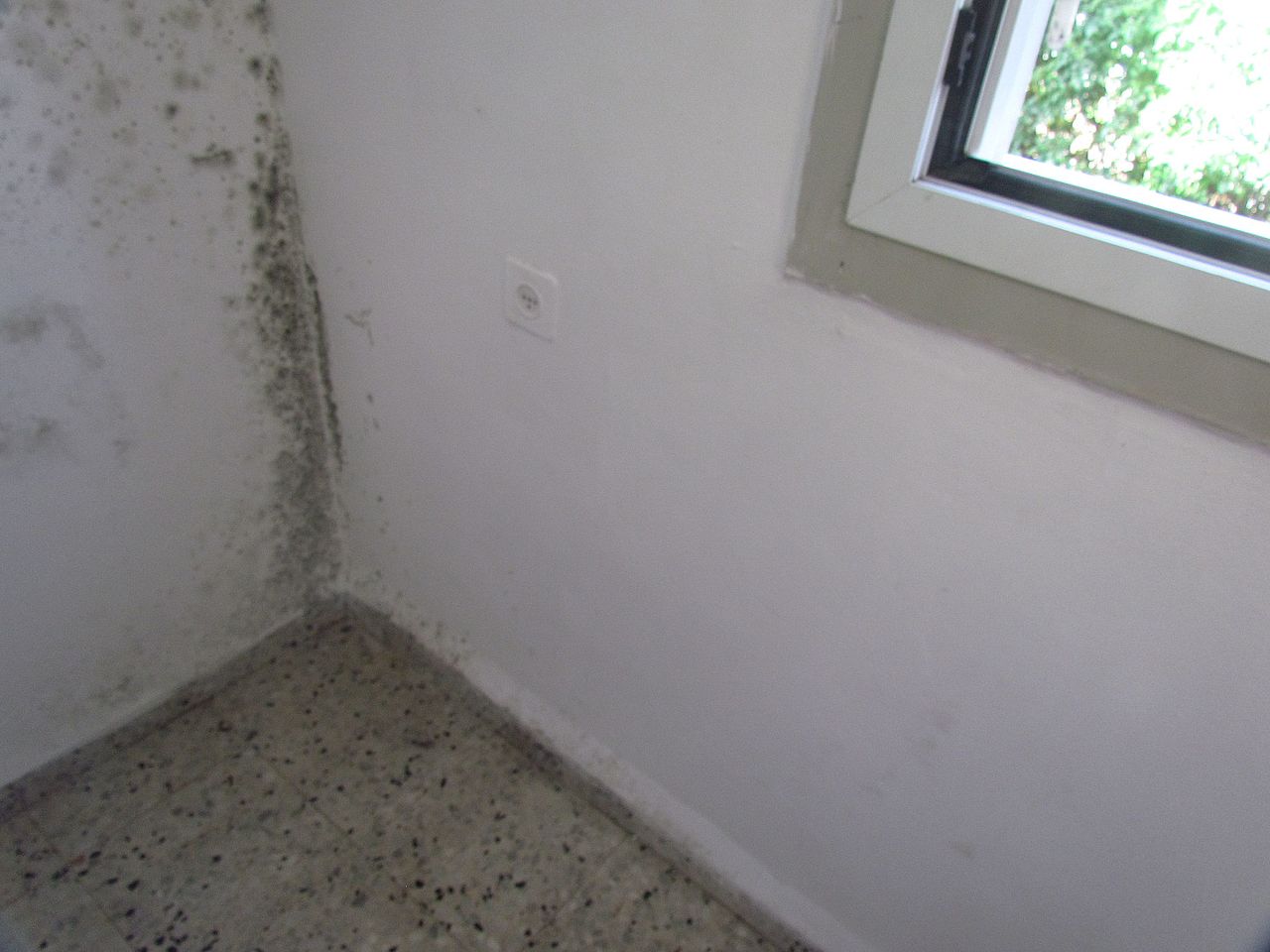
A musty smell after water damage almost always means moisture is still trapped somewhere, and where moisture lingers, mold is usually already growing.
That smell is not cosmetic. It is your home's early warning that the water job is not actually finished.
You get rid of it by finding the hidden source, drying it fully, removing what stayed soaked, and cleaning the surfaces. Not by covering it up.
This is the one page that puts those steps in order and, just as important, tells you what never works so you stop wasting money on it.
Why a musty smell after water damage will not just go away
The smell feels like the leftover of an old problem, but it is really a live signal that the problem is still here.
As long as drywall, wood, carpet padding, or insulation stays damp, the odor keeps regenerating. You can air out a room for a week and the smell returns the moment you close the windows.
That is the trap homeowners fall into. They dry the surface they can see, the floor looks fine, and the material inside the wall is still wet.
So the real question is never "how do I cover this smell." It is "what is still wet, and is mold already growing on it."
What actually makes the smell: mold and its gases
The musty, earthy odor comes from mold and mildew feeding on your wet building materials.
As mold digests damp drywall and wood, it releases gases called microbial volatile organic compounds, or mVOCs. Those gases are the smell you are chasing.
Here is the part that surprises people. You can smell mVOCs without seeing a single spore, because the gas drifts through the air while the mold itself stays hidden inside a wall or under the floor.
So a strong musty smell with no visible mold does not mean you are imagining it. It usually means the mold is somewhere you cannot see yet.
The smell also matters for your health. Researchers have linked mVOC and mold exposure to headaches, congestion, and eye or throat irritation, especially for anyone with allergies or asthma.
A musty smell after water damage often means hidden mold
When a home smells musty but you cannot find the source, the odds are that the mold is hidden, not absent.
The EPA says plainly that you should suspect hidden mold when a building smells moldy but you cannot see the source, or when you know there was water damage. That smell is meant to be acted on, not ignored.
Mold likes the places your eyes never reach: the back side of drywall, under wallpaper or paneling, the top of ceiling tiles, and the underside of carpet and padding, per EPA guidance.
This is also why the smell often gets stronger in one spot. Follow that. A localized musty zone usually sits right on top of the wet material feeding it.
Find the source before you deodorize anything
Deodorizing a room while the material is still wet is like drying the floor with the tap running. Find the moisture first.
Start with your nose. Move slowly through the space and note where the smell peaks, then look low, since water settles at baseboards, under sinks, and behind furniture.
Check the spots people forget: under carpet and padding, inside closets, behind the toilet, around window frames, and along the bottom foot of drywall where wicked-up water hides.
A cheap moisture meter settles most arguments. Press it to suspect drywall or subfloor and compare against a dry wall across the room. A high reading is your target.
Remember that walls dry from the outside in, so a surface can feel dry while the core is soaked. Knowing how long walls really take to dry keeps you from calling it done too early.
How to get rid of a musty smell after water damage, step by step
Once you know where the moisture is, the removal follows a fixed order. Skip a step and the smell comes back.
- Stop the moisture source. Fix the leak, seal the entry point, or repair the plumbing. Nothing else works while water is still coming in.
- Remove what stayed soaked. Wet carpet padding, saturated drywall, and soggy insulation rarely recover and hold the smell. They usually have to come out.
- Dry the space hard. Run fans for airflow and a dehumidifier to pull moisture out of the air, and keep it going for days, not hours.
- Clean the hard surfaces. Wipe salvageable studs, concrete, and sealed surfaces with detergent and water or a white vinegar solution, then dry them fully.
- Absorb the leftover odor. Once things are dry, bowls of baking soda or activated charcoal pull residual smell out of the air over days.
- Filter the air. A HEPA air purifier with a carbon filter clears lingering mold particles and mVOCs while everything finishes drying.
Keep the indoor humidity below 60 percent the whole time, and ideally between 30 and 50 percent, which the EPA calls the level where mold struggles to grow.
Porous items are a judgment call. Soaked drywall and padding usually go, while sealed and hard materials clean up. For the gray areas, learn when wet carpet can be saved before you decide.
What does not work, and can make it worse
Most of the money wasted on musty smells goes to products that hide the odor instead of ending it.
Air fresheners, plug-ins, and candles are the biggest offenders. That quick spritz masks the smell for an hour while the mold underneath keeps growing and the odor returns.
Ozone generators alone can knock the smell down briefly, but they do nothing about the moisture, so the odor comes back. Ozone is also a lung irritant, and you should never run one in an occupied room.
Bleaching porous surfaces is another myth. Bleach mostly sits on the surface and its water content can re-wet the material, feeding the very mold you are trying to kill.
Painting over a stain seals the smell for a few weeks, then the mold gases bleed right back through. None of these touch the actual cause, which is water in the material.
DIY deodorizing vs calling a professional
You can handle a musty smell yourself when the water was clean, caught fast, and small, and you can find and reach the wet material.
The EPA's rough line is 10 square feet. If the moldy area is smaller than a 3 foot by 3 foot patch, most homeowners can clean it. Larger than that leans toward a professional.
Call a pro when the smell survives your drying, when it traces to sewage or floodwater, when it is spreading through the HVAC, or when you simply cannot locate the source.
Professionals bring moisture meters, thermal cameras, and commercial dehumidifiers that find and dry water inside walls that home fans never reach. That is what actually ends a stubborn smell.
Not all crews are equal, so it pays to know how to choose a restoration company that dries inside the wall cavities instead of pulling fans early. It also helps to price the job first, since restoration costs vary widely.
When the musty smell means you still have a problem
The clearest sign your water damage is not finished is simple: the smell comes back after you cleaned and dried.
A returning odor means one of two things. Either the moisture source is still active, or mold is established behind a surface you have not opened yet.
Treat a persistent musty smell plus health symptoms, like ongoing congestion or headaches that ease when you leave the house, as a reason to investigate deeper, not to buy another air freshener.
At that point the smell has done its job. It told you the water reached somewhere hidden, and the fix is to open up and remove the mold at the source, then dry it for good.
Common questions
Why does the musty smell come back after I cleaned and dried everything?
Because something is still wet, or mold is growing where you cannot see it. The odor is a gas that mold gives off, so it keeps regenerating until every damp material is fully dry or removed. A returning smell means the source is still active or hidden behind a wall, floor, or ceiling.
Does a musty smell always mean mold?
Almost always, when it follows water damage. The musty, earthy odor comes from gases that mold and mildew release as they grow on damp material. You can smell those gases even with no visible mold, because the growth is often hidden inside walls, under carpet padding, or above ceiling tiles.
Can I just use an air freshener or an ozone machine to get rid of it?
No. Air fresheners and candles only mask the smell for an hour while the mold keeps growing. Ozone generators can knock the odor down briefly but do nothing about the moisture, so it returns, and ozone is a lung irritant you should never run in an occupied room. Only removing the moisture and mold ends the smell for good.
How long does the musty smell take to go away after water damage?
Once the moisture source is fixed and the wet material is fully dried or removed, the smell usually fades over several days as the space airs out and dehumidifies. If it is still strong after a week of drying, moisture or mold is still present and needs to be found and dealt with.
Is the musty smell dangerous to breathe?
The gases behind the smell have been linked to headaches, congestion, and eye or throat irritation, and mold itself can trigger allergies and asthma. Short exposure is not usually an emergency, but a lasting musty smell means ongoing mold, which is worth removing for your health, especially for children, older adults, and anyone with breathing issues.
The area is completely dry but it still smells musty. What now?
A dry surface with a lingering smell usually means mold is set into a porous material or hidden behind it. Recheck with a moisture meter, look under carpet padding and behind drywall near the old leak, and if you still cannot find it, bring in a professional with thermal imaging. Deodorizing will not fix mold you have not removed.
Sources
- A Brief Guide to Mold, Moisture and Your Home — U.S. Environmental Protection Agency
- Mold Cleanup in Your Home — U.S. Environmental Protection Agency
- Mold and Dampness: Basic Facts — U.S. Centers for Disease Control and Prevention (CDC)
- ANSI/IICRC S500 Standard for Professional Water Damage Restoration — Institute of Inspection, Cleaning and Restoration Certification (IICRC)
- Emissions of Fungal Volatile Organic Compounds in Residential Environments — National Library of Medicine, PubMed Central
- Musty Smell in the House: Common Causes, Natural Fixes and Smart Solutions — Panasonic Indoor Air Quality
- How to Remove Musty Odors After Water Damage — PuroClean
- Homeowner discussions on lingering musty smell after drying a flood — Home improvement community forums
 Mold & HealthHow to get rid of mold after water damage
 Mold & HealthIs black mold from water damage dangerous?
 Drying & RemovalHow long does it take to dry out walls after a leak?
 MaterialsWet carpet after water damage: can it be saved?
 DIY vs ProfessionalHow to choose a water damage restoration company
 CostsWhat does water damage restoration cost?