
When a burst pipe starts pouring, the first move is always the same: shut off the main water valve, then deal with everything else.
Nothing else you do matters while water is still arriving. Buckets and towels are losing moves until the flow stops.
One exception overrides the valve. If water is reaching outlets, cords, or the electrical panel, the power comes off first, from a dry spot.
The rest of this is the ordered version, including the two steps homeowners skip that cost them the most: draining the lines and documenting before cleanup.
The first 5 minutes after a burst pipe
Do these four things, in this order, before anything else.
- Shut the main water valve. Turn it clockwise until it stops. This ends the flow at the source.
- Cut power to the wet area at the breaker panel, but only if you can reach the panel without standing in water.
- Open the faucets, starting with the lowest ones in the house, to drain what is still in the pipes.
- Photograph and video everything before you move a single box or towel.
If the leak is spraying near a light fixture, ceiling can light, or outlet, treat it as live and dangerous until the breaker is off.
Then call a plumber. You are not waiting on them to start, but the callback queue during a freeze event can run long, so get in it early.
If water has already collected in a lower level, the ordered response there is its own job. Here is what to do first when a basement floods.
How to shut off the water at the main
The main shutoff is almost always where the supply line enters the house, usually on the wall facing the street.
In a basement, look on the front foundation wall. On a slab, check a utility closet, the garage, or near the water heater.
In warm climates with no basement, it is often outside at the meter box, under a concrete or plastic lid at the property line.
You will find one of two handles. A lever ball valve turns a quarter turn until it sits across the pipe. A round gate valve takes several full clockwise turns.
Old gate valves seize. If it will not budge, do not force it until it snaps. Use the curb stop at the meter instead, which needs a meter key or a water department crew.
Go find your valve today, before you need it. In an actual emergency, hunting for a valve you have never touched costs the exact minutes that decide the size of the loss.
Drain the lines so the burst pipe stops feeding the leak
This is the step nearly everyone skips, and it keeps water running out of the break for a surprisingly long time.
Shutting the main stops new water. The gallons already sitting in the pipes keep draining out of the break by gravity.
So open the lowest cold taps in the house first, then work upward, and flush the toilets once.
For the hot side, shut the valve on top of the water heater, then open hot taps. Do not drain the heater tank unless the burner or breaker is off first.
Leaving faucets open also matters during a freeze. An open tap gives expanding ice somewhere to push instead of splitting another length of pipe.
Document it before you clean anything up
This step feels wrong when the floor is wet, and it is the one that pays for itself more than any other.
Shoot wide photos and a slow video of every affected room before you move furniture, lift rugs, or start extraction.
Get the broken section of pipe in frame, the water line on the wall, and every soaked item with its model and serial number where you can.
Keep the failed piece of pipe if a plumber cuts it out. Physical evidence of a sudden failure is worth more than a description of one.
Save every receipt from hour one: the shop vac, the fans, the hotel, the emergency plumber. Those are usually reimbursable mitigation costs.
Coverage turns on the cause, not the mess. Whether homeowners insurance covers a burst pipe depends on whether the failure was sudden and whether the house was heated.
Water still coming in, or pooling near the panel? That is not a wait-and-see. Get help moving now.
(844) 502-1354Getting the water out and the drying started
Once the flow has stopped and the room is photographed, extraction starts. Speed is the whole game from here.
A wet/dry shop vacuum handles small volumes. Anything more than an inch across a large area wants a submersible pump or a crew with a truck-mount.
Pull up soaked carpet and padding so the floor underneath can dry. Wet pad rarely comes back and it traps moisture against the subfloor.
Then move air. Air movers aimed along wall surfaces plus a dehumidifier in a closed room do in days what open windows do in weeks.
Pull the baseboards off the wet walls. That releases trapped water at the floor line and lets the wall cavity breathe.
The wall itself may still be fine. Here is when wet drywall can be dried instead of replaced, and the tests that decide it.
Do not open the windows by reflex. That only helps when the outside air is drier than the inside air, which on a humid day it is not.
Move soaked contents out of the room the same day. Wet cardboard, books, and upholstery keep feeding humidity back into a room you are trying to dry.
What to do while you wait for the plumber
During a hard freeze, every plumber in the region is booked, and the honest wait can be days, not hours.
With the main off, the house is stable. Your job in the meantime is to keep the damage from getting larger.
If you need water, you can reopen the main briefly, fill containers, then shut it again. Never leave it open unattended with a known break.
A repair clamp or pipe tape on an exposed pipe is a hold, not a fix. It buys time, and only with the pressure already off.
Keep the heat on. Turning the furnace off to save money in a house with a broken line is how one burst pipe becomes four.
If the break is in an exterior wall or crawlspace, open cabinet doors and let warm room air reach the remaining pipes.
Save the failed section of pipe when the plumber cuts it out. It is physical proof of a sudden failure, which is exactly what a claim turns on.
How to find a burst pipe you cannot see
Not every break announces itself. Some soak a wall cavity for hours before anything reaches a floor you walk on.
The clearest tell is the water meter. Shut every fixture, then watch the leak indicator. Any movement means water is going somewhere.
Listen with the house quiet. A hiss or rush inside a wall with everything off points at a pressurized supply line rather than a drain.
Look for the pattern that separates a supply break from a drain leak: a supply leak runs constantly, a drain leak only when something is used.
Watch for warm spots on a floor, which usually mean a hot water line failed under a slab. That is a plumber call, not a DIY dig.
Frozen lines have a tell before they burst. A faucet that gives a trickle or nothing on a cold morning means ice is already in the pipe.
If you catch it at that stage, thaw it slowly with a hair dryer or heat tape, working from the faucet back toward the frozen section.
Never use a torch or open flame on a pipe. That is a house fire and, in a plastic line, a much worse leak a moment later.
Leave the faucet open while you thaw. Water moving through the line tells you the ice cleared, and the open tap relieves pressure in the meantime.
If the only symptom so far is a stain and a smell, grade it before you decide. Here is how to tell whether you have serious water damage or a cosmetic mark.
What a burst pipe repair costs, and who pays
There are two bills, and people routinely confuse them. The plumbing repair is the small one.
Splicing a failed section of copper or PEX in an accessible spot is usually a same-day job. Reaching a pipe under a slab or behind tile is where the number climbs.
The larger bill is the water damage: extraction, days of equipment, drywall, flooring, insulation, and repainting.
Standard policies usually cover the damage the water caused but not the failed pipe itself, which is treated as maintenance.
The exception that bites people is a house left unheated in winter. Insurers routinely deny freeze claims where the heat was off and no reasonable care was taken.
Before you agree to any scope of work, get the range in your head. Here is what water damage restoration costs and what drives the number.
Water stopped but the walls still feel damp? A moisture reading tells you if drying is actually working.
(844) 502-1354Stopping the next one
Most residential bursts trace to one of three causes, and all three have cheap defenses.
- Freezing. Uninsulated pipes in exterior walls, crawlspaces, attics, and garages split when the water inside expands.
- Age and corrosion. Old galvanized steel and thin copper fail at pinholes first, then let go all at once.
- Pressure. Incoming pressure above roughly 80 psi stresses every joint, valve, and supply hose in the house.
A pressure gauge that threads onto a hose bib costs about ten dollars and tells you in one minute whether you need a regulator.
Replace rubber washing machine hoses with braided stainless, and put a battery water alarm under the heater, the washer, and the sink.
Know where the valve is, keep it working, and label it. That one habit turns a catastrophic loss into an expensive afternoon.
If yours froze, the fix is seasonal rather than structural. Here is how to keep pipes from freezing and bursting next winter.
Common questions
What is the very first thing to do when a pipe bursts?
Shut off the main water valve, turning it clockwise. The only thing that comes before it is cutting power at the breaker, and only when water is reaching outlets, cords, or the panel and you can reach the panel from a dry spot.
Where is my main water shutoff valve?
Usually where the supply line enters the house on the wall facing the street, often in a basement, crawlspace, garage, or utility closet near the water heater. In warm climates with no basement it is commonly outside in the meter box at the property line.
Should I turn off the water heater after a burst pipe?
Yes. Once the main is off, shut the cold inlet valve on the heater and turn off its gas burner or breaker. An electric element that runs in an emptying tank burns out, and a gas burner heating a dry tank is a real hazard.
Can I fix a burst pipe myself with tape or a clamp?
A repair clamp or pipe tape is a temporary hold, not a fix, and only after the water is off. It buys you time until a plumber can cut out the failed section. Leaving a patched pressurized line in a wall invites the same failure again.
How much water comes out of a burst pipe?
Far more than people expect. Even a small crack in a pressurized line can release hundreds of gallons in a day, which is why the shutoff valve matters more than any amount of mopping or towel work in the first ten minutes.
Will insurance cover a burst pipe if I was away from home?
Often yes if the failure was sudden and the house was reasonably maintained. The common denial is a freeze in a home left unheated, where the insurer argues you did not take reasonable care. Document the thermostat setting and any shutoff you did before leaving.
Sources
- A Brief Guide to Mold, Moisture and Your Home — U.S. Environmental Protection Agency
- Facts + Statistics: Homeowners and Renters Insurance — Insurance Information Institute
- ANSI/IICRC S500 Standard for Professional Water Damage Restoration — Institute of Inspection, Cleaning and Restoration Certification (IICRC)
- Protecting Your Home From Frozen Pipes — American Red Cross
- Repairing Your Flooded Home (FEMA P-234) — Federal Emergency Management Agency and the American Red Cross
- Mold Cleanup After a Flood — U.S. Centers for Disease Control and Prevention (CDC)
- Water Heater Safety and Maintenance Guidance — U.S. Department of Energy
- Uniform Plumbing Code, residential water pressure limits — International Association of Plumbing and Mechanical Officials
 InsuranceDoes homeowners insurance cover a burst pipe?
 EmergencyBasement flooded? What to do first, hour by hour
 PreventionHow to prevent frozen pipes from bursting
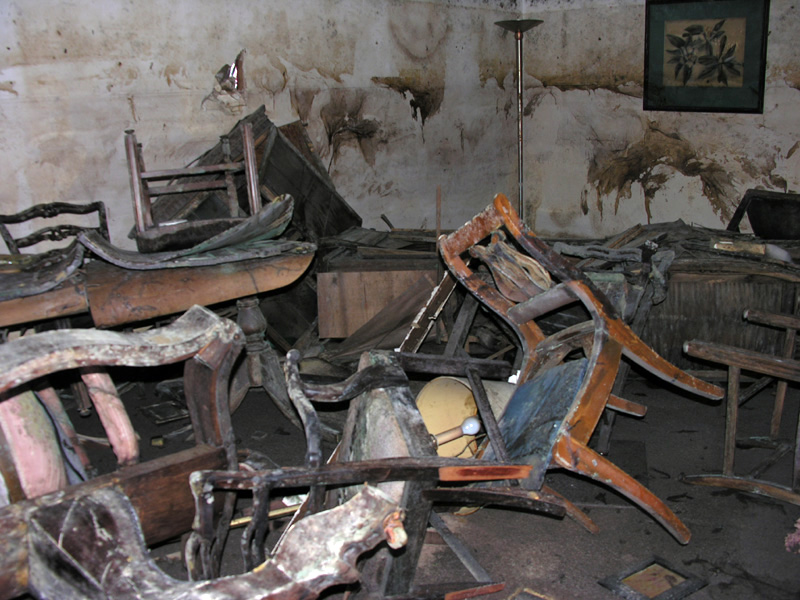 CostsWhat does water damage restoration cost?
 Drying & RemovalHow long does it take to dry out walls after a leak?
 AssessmentHow do I know if my water damage is serious?